
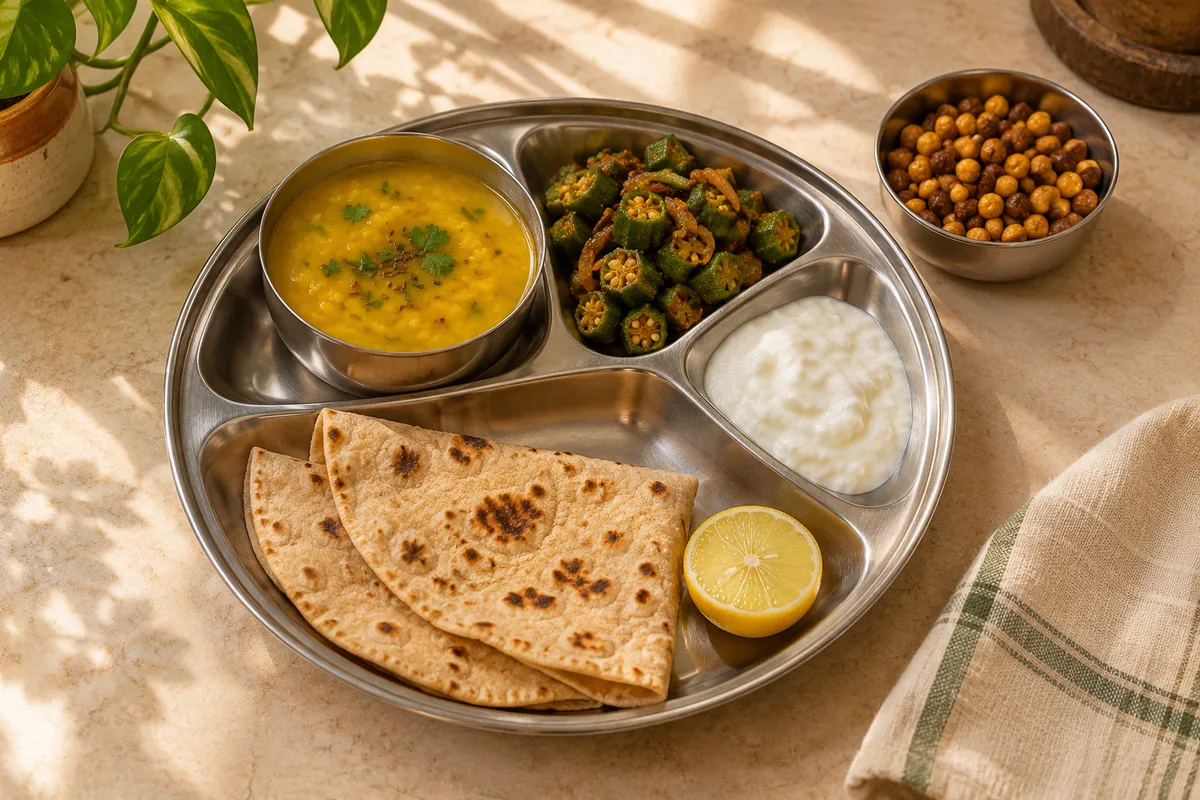
Start with the meal you already eat. Add a proper helping of dal to roti and sabzi, use paneer or tofu bhurji as a wrap filling, or stir cooked soya chunks into a vegetable pulao. Dal, beans, soya and dairy each give you different ways to put protein on the plate.
A 30 g dry portion of split moong dal supplies about 7.2 g of protein. A 30 g dry portion of Nutrela soya chunks supplies about 15.6 g. A 75 g portion of plain paneer supplies about 14.1 g using the Indian Food Composition Tables. These are food examples for comparing servings. ICMR–NIN composition tables, B010 and L003 · Nutrela
Compare portions you would actually eat
The two dry weights below describe the ingredients that go into the pan. The dairy and tofu weights describe the amount you serve. Use a scale once to see what your regular serving looks like.
| Food | Weight used | Approximate protein |
|---|---|---|
| Split moong dal | 30 g dry, before cooking | 7.2 g |
| Nutrela soya chunks | 30 g dry, before cooking | 15.6 g |
| Plain paneer | 75 g before cooking | 14.1 g |
| Health On Plants Classic Tofu | 75 g, using its declared value | 15.5 g |
| Plain boiled chickpeas | 100 g cooked and drained | 8.9 g |
The tofu value describes one specific product. Check the panel on your pack. The chickpea figure uses a cooked reference. Classic Tofu product information · USDA FoodData Central, SR Legacy entry 173757
Three Indian tiffins you can put together
Roti, bhindi and dal. Pack the rotis and bhindi as usual. Cook 90 g of dry split moong for three equal helpings and keep one for this lunch. The dal contributes about 7.2 g of protein. Use a separate container for the dal if you want the roti to stay dry.
Soya pulao and cucumber. Use 60 g of dry chunks for two lunch boxes. After cooking, split the chunks evenly between the boxes and add rice and vegetables. Each box gets about 15.6 g of protein from the chunks when the packet lists 52 g per 100 g dry. The soya guide shows how to estimate a serving when the portions are unequal.
Paneer bhurji wrap and carrot sticks. Use 75 g paneer in the filling for about 14.1 g from the paneer. For a dairy-free wrap, use tofu and calculate from its actual label. Our paneer portion guide and tofu label guide explain why the product matters.
These examples count the main protein ingredient. The rest of the meal contributes nutrients too. See the vegetarian tiffin guide for canteen options and the Indian dietary guidelines for food variety.
If your lunch uses rajma instead of chole, see how to estimate protein in a bowl of rajma. Weigh the cooked beans separately from the gravy when you can.
Compare the cost of 10 g of protein
Use the price you pay and the protein in the edible pack. Multiply pack weight by protein per 100 g and divide by 100. Divide the pack price by that result and multiply by 10.
Here are two online listings checked on 16 November 2026. These listed prices exclude delivery and may vary by location and offer.
| Pack and price as listed | Protein in the pack | Cost per 10 g |
|---|---|---|
| Nutrela soya chunks, 1 kg, ₹135.27 | 520 g at 52 g per 100 g dry | ₹2.60 |
| Amul Fresh Malai Paneer, 200 g, ₹76 | 40 g at the listed 20 g per 100 g | ₹19.00 |
The calculation compares the price of one nutrient. A kilogram of soya takes more money upfront than the paneer pack in this example. Consider storage, taste, how often you cook it and the amount you will use. See how to compare labels on the same basis if the listings use different units.
Keep a portion note for next week
Save this table using your browser’s print menu, or write four things on your shopping list: food, dry or served weight, protein reference and price. Note how many meals you got from the pack. If the weight changes while you cook, use the dry-to-cooked guide before copying a value.
For a quick breakfast, try moong dal chilla. For a bowl of chole, use the cooked chana calculation. If you want something dry for your desk, compare roasted chana and makhana at the same weight.