
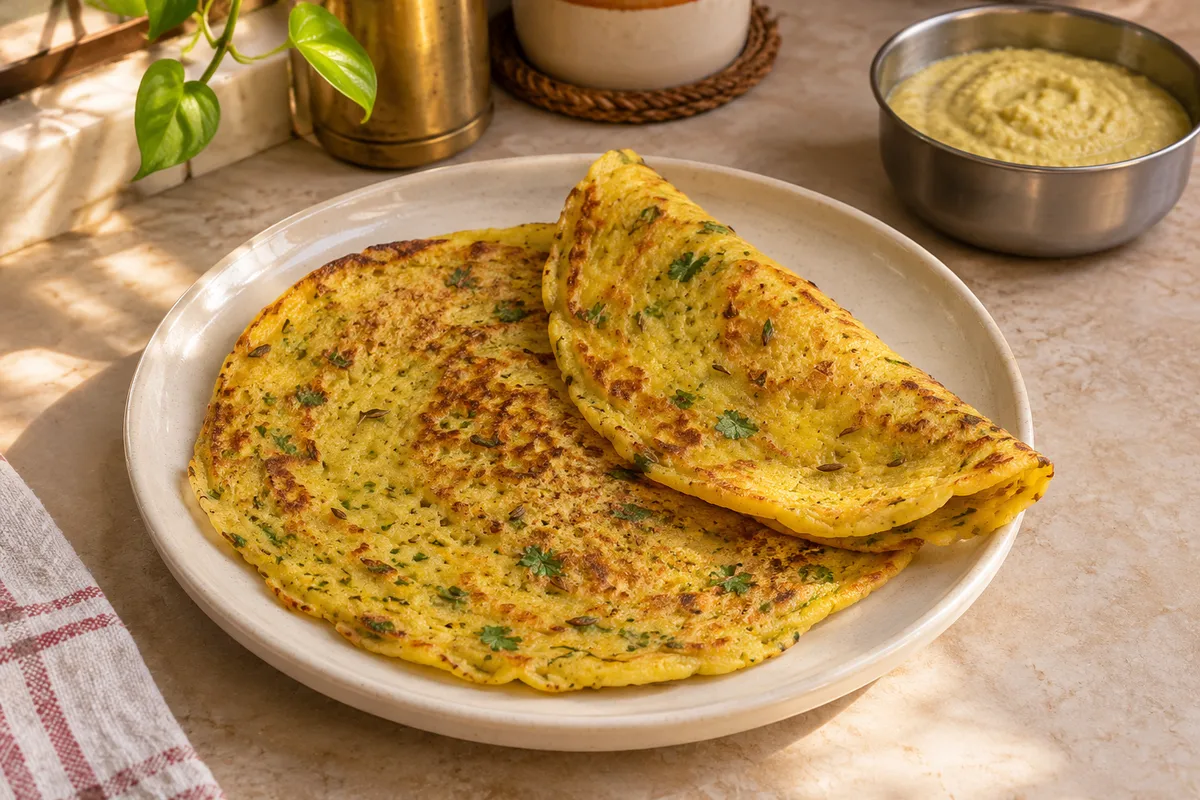
A moong dal chilla contains about 6 g of protein from the dal if you use 100 g of dry split moong dal for four equal chillas. The same batter poured into five equal chillas gives about 4.8 g each. Moong dal contributes 23.88 g protein per 100 g dry in the Indian Food Composition Tables, entry B010.
Calculate from the dal you put in the bowl
Weigh yellow split moong before soaking. Put the dry weight in your notes. Prepare one batch of batter, then divide its estimated protein by the number of equal chillas you actually cook.
| Dry moong and yield | Protein from dal per chilla |
|---|---|
| 60 g for three | 4.8 g |
| 80 g for four | 4.8 g |
| 100 g for four | 6.0 g |
| 100 g for five | 4.8 g |
The estimates assume you use all the batter. If one chilla uses two ladles and another uses one, divide by ladles. In a batch that uses eight equal ladles, a chilla made with two takes a quarter of the batter. With 100 g dry dal, that gives about 6 g protein from the dal.
Keep the filling separate
Start with a chilla from the 100 g, four-chilla batch. Add 50 g plain paneer and you add about 9.4 g protein using the Indian food-table reference. That gives about 15.4 g from the dal and paneer together. Use the paneer portion table if you have a product with a different label.
For a tofu filling, suppose your block lists 12 g protein per 100 g. A 50 g helping adds 6 g in that example, bringing the two ingredients to approximately 12 g together. Swap the example number for the value on your packet. Coriander, onion and chilli can add flavour without needing their own line in this quick estimate. If you also use curd, count its actual portion separately.
Avoid mixing up dry dal, soaked dal and batter
Soaked dal weighs more because it takes up water. Batter contains additional liquid too. Apply the dry dal figure to the dry starting amount. If you have already made the batter and forgot the weight, use the volume of dry dal you usually start with as a rough guide, or weigh it next time. The raw and cooked weight guide explains when a weight from the pan is useful.
Some recipes combine moong with besan or another dal. Add the protein of each dry ingredient before dividing the batch. Follow a separate besan chilla calculation if chickpea flour is your main ingredient. The two recipes can produce similar-looking breakfasts with different amounts of batter and protein.
If you only have the cooked weight, weigh all the plain chillas together before adding fillings. Suppose the 100 g batch gives 240 g of cooked chillas and you eat 90 g. If the batter was well mixed, the serving represents 90 ÷ 240 of the batch, or about 9 g protein from the dal. Use this method when the chillas differ in size.
Make the estimate easy to repeat
Use the same bowl or scoop next time and write how many chillas the recipe produced. When the batch is bigger, update both the dry weight and yield. For breakfast on a busy morning, decide while filling the pan whether a plain chilla and a side or a folded chilla with filling will work better.
Try more egg-free Indian breakfast ideas if you want to alternate with poha or upma. For a fuller view of meals, the vegetarian protein guide compares what different portions of dal, soya, paneer, tofu and chickpeas add.