
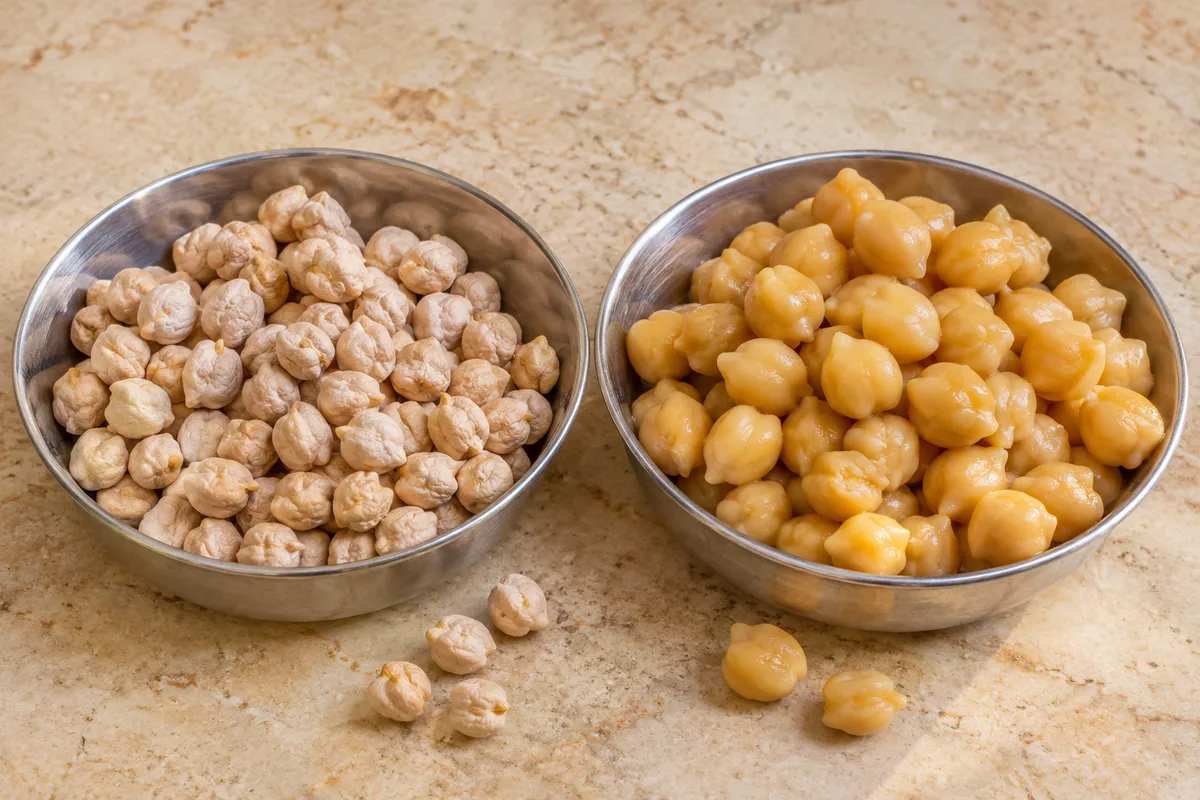
100 g of plain boiled chickpeas contains about 8.9 g of protein in the USDA reference. A bowl holding 150 g of the same cooked chickpeas gives about 13.3 g. Weigh the chickpeas after cooking and draining. This reference describes cooked chickpeas without added salt. USDA FoodData Central, SR Legacy entry 173757
Work out the amount in your katori
Put the empty katori on the scale and zero it. Fill it as you normally would with boiled, drained kabuli chana. Multiply the weight you see by 8.86 and divide by 100. If your usual bowl differs from the example, use your weight.
| Cooked chickpea portion | Approximate protein |
|---|---|
| 75 g | 6.6 g |
| 100 g | 8.9 g |
| 125 g | 11.1 g |
| 150 g | 13.3 g |
| 200 g | 17.7 g |
Bowls with the same name can hold very different amounts. You only need to weigh a familiar helping once to get a better starting point for that bowl. Repeat if you change the bowl, the way you fill it or the variety you cook.
Keep the gravy separate in chole
The weight of a served curry includes the chickpeas, cooking liquid and other ingredients. If a helping has 100 g cooked chickpeas and 80 g gravy, record about 8.9 g from the chickpeas. The gravy may contain other nutrients depending on the recipe. Treat it as its own ingredient if you need a more complete meal estimate.
When making chole at home, cook the chickpeas and weigh them before stirring them into the masala. If 450 g of drained chickpeas goes into three equal servings, each gets about 150 g of chickpeas and 13.3 g protein from them. If you keep one box for tomorrow, portion the chickpeas evenly before dividing the gravy. Try chana with rice, vegetables or a wrap. The vegetarian tiffin guide has examples that use all three.
Use a different reference for dry, canned or roasted chana
Dry chickpeas absorb water as they cook. A value for 100 g dry belongs with a dry weight. Use the cooked table above when the weight is cooked and drained, or use a matching dry reference to estimate the whole recipe from the starting weight. The dry versus cooked guide shows both methods.
For canned chickpeas, look for a drained weight and check whether the nutrition information refers to drained contents. For kala chana, use a value for the matching variety and preparation when available. This article uses a general cooked chickpea reference to estimate servings of boiled kabuli chana. Crunchy roasted chana has its own label and portion. Use the roasted chana and makhana comparison for dry snacks.
If a packet or recipe gives values for a cup, check what that cup weighs. The USDA record uses 164 g for one cup of these cooked chickpeas, equivalent to about 14.5 g protein. Your steel katori may hold less than that. For a photo-based meal record, note the same bowl and how full it was, then weigh one serving later to improve your estimate.
Choose a starting portion you actually use
For a chana salad, weigh the drained component before adding cucumber, tomato and lemon. For a lunch of chole and roti, note the chickpea weight separately from the rotis. For a canteen curry where you cannot weigh the solids, record a rough portion and treat the number as approximate. The vegetarian protein guide puts these portions alongside dal and soya so you can make a practical shopping decision.