
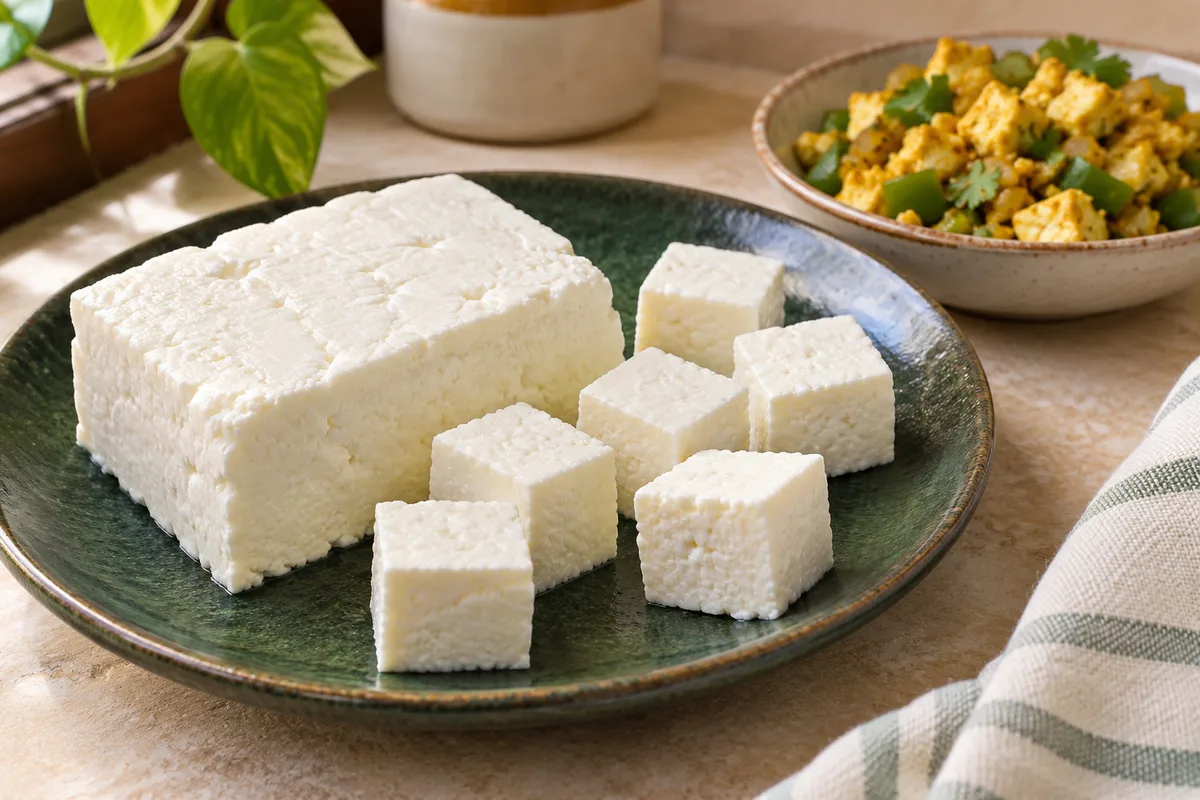
100 g of paneer contains about 18.9 g of protein in the Indian Food Composition Tables. A 50 g portion supplies about 9.4 g using that reference. If you have a labelled pack, use its own number. Two products with similar names can have different protein values. ICMR–NIN Indian Food Composition Tables, L003
Convert the value to the weight you eat
Weigh the paneer before it goes into the pan. Multiply the amount per 100 g by the paneer weight and divide by 100. If you made one batch for three people, divide by three only when each person gets about the same amount of paneer.
| Paneer before cooking | Protein using the Indian reference |
|---|---|
| 50 g | 9.4 g |
| 75 g | 14.1 g |
| 100 g | 18.9 g |
| 150 g | 28.3 g |
| 200 g | 37.7 g |
Cube counts are awkward because size varies. Cut the amount you would actually put in a wrap and weigh it once. From then on you can use that as a kitchen estimate for the same product and cut. Keep the gram weight if you plan to compare with a different food later.
Use the right pack or food entry
BigBasket lists 20 g protein per 100 g for Amul Fresh Malai Paneer. At 75 g, that works out to 15 g. Amul's manufacturer page for its sterilised paneer lists 12 g per 100 g. A 75 g portion of that product gives 9 g using its listing. The sterilised pack also lists a drained weight. Use the amount of paneer you actually serve and check the label's basis. Fresh Malai Paneer retailer listing · Amul sterilised paneer specification
For loose or homemade paneer, use the food-table number as an estimate. The milk used, the moisture left after pressing and the recipe can affect the result. A kitchen scale gives you the portion weight. A food table gives you a reference for the composition. Keep those two facts separate when you record the result.
Check whether the values describe the full pack or a typical serving. If 50 g is half of your 100 g block, it contains half of the listed value for 100 g.
Calculate protein from the paneer in bhurji or gravy
Suppose a 200 g block goes into a pan of bhurji. Using the Indian reference, the whole pan starts with about 37.7 g of protein from the paneer. In three equally portioned wraps, each gets about 12.6 g from the paneer. Any protein from the roti and other ingredients is separate.
For paneer curry, start with the paneer weight in the recipe and check how the pieces were divided. A 150 g helping of curry can include sauce, so applying a plain-paneer value to the whole bowl can overstate the paneer contribution. If someone serves the curry at a canteen, a rough estimate of the pieces is more informative than treating all of the gravy weight as paneer. See why raw and cooked weights differ.
Compare paneer with the food it will replace
If you are choosing a filling for a wrap, compare the amount of each filling you would actually use. Our paneer and tofu comparison covers texture as well as protein. The tofu portion guide shows why two packs of tofu can give different answers.
When buying for the week, note the pack weight, the protein per 100 g and the price. Then check how many lunches you get from the pack. The Indian vegetarian protein guide shows the cost calculation and gives meal ideas for dal, soya, tofu and paneer.